

Author: Timothy Tin
Translator: Mandy Kwan
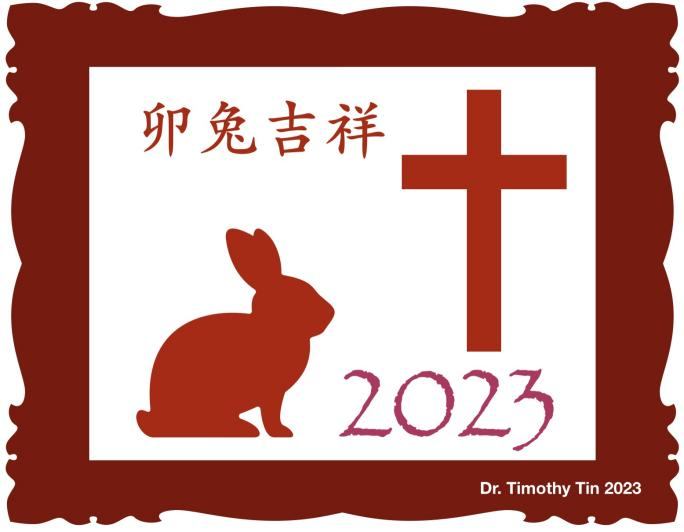
2023’s Lunar New Year occurs earlier than previous years’ dates, which coincides with a hare’s spirit of swiftness and brevity. People in ancient China viewed the hare with exceptionally rich and complex imagination. According to folklore, there are numerous tales associated with the hare. For example, in the twelve animals of the Zodiac, other than the six farm raised animals such as the cow, sheep, pig, horse, dog, and rooster, the hare was added to the lot. Since horses symbolized a nation’s military prowess, they were more valuable compared to other animals so they couldn’t be offered at the altar for their gods. Thus the hare became a substitute for the horse, since it’s thought to be swift and quick like a horse would be. No one can argue with the tastiness of roasted rabbit meat! Thus the hare became a suitable replacement for the horse, as evident in Chinese idioms such as “sacrifice for the sake of the horse” and “the hare substitutes the horse”. Among the seven horses of the emperor, Qingshi Huangdi, the second horse was named “White Rabbit”. In the “History of Three Kingdoms”, there was a red rabbit who became a general’s “righteous horse”, because after the owner died the rabbit refused to eat and died as well. Ancient Chinese even claimed that a red rabbit is luckier than a white rabbit! There is even an idiom that compares a rabbit’s swiftness is comparable to a horse, with an almost supernatural like quality.
The rabbit’s status not only is synonymous with a famous hound in folklore, it is also a bejeweled animal that ascended to the moon! In the Mid Autumn Festival legend of Lady Chang’e, the rabbit is always beside Chang’e concocting potions. Because Chang’e drank the elixir of immortality and ascended to the moon, the rabbit would create the same elixir at every full moon, making it a mystical and immortal animal. Ancient poets would use rabbits to symbolize the moon. In the art of paper cutting a symbol of “rabbit in a snake bowl” would bring good luck, and it’s often used in Chinese weddings to represent the harmony between husband and wife. You might wonder how a cunning snake can be yoked with an innocent rabbit to represent harmony? According to the Shanxi Art Museum’s periodical published on May 23, 1986, in indigenous societies, a legend said that a tribe with a snake symbol and a tribe with a rabbit symbol became enemies and were set on destroying one another. Luckily, leaders of both tribes compromised and reconcilated, joined forces and became one large tribe that fortified and thrived. Thus the idiom of “snake in unity with the rabbit” and the “rabbit in snake bowl” symbol has always become popular to represent the ideal of a marriage. The snake and rabbit can also represent good and evil. Even in the midst of evil we can uphold the purity of heart as symbolized by the rabbit, that through the power of love, one can overcome evil, turn enemies into friends, and bring everlasting joy and peace.
To sum up, we can observe the rich symbolism of rabbits in folklore and history:
1. The rabbit of the twelve zodiac symbolized the idea of sacrifice.
2. Emperor Qingchi HuangDi’s rabbit represents purity and refinement.
3. General Guan Yu’s rabbit represents courage and loyalty.
4. The rabbit in folklore represents someone who is wise and swift.
5. The rabbit of the Mid-Autumn festival represents a brightly lit moon and eternity.
6. The rabbit in marriage customs represents love and kindness.
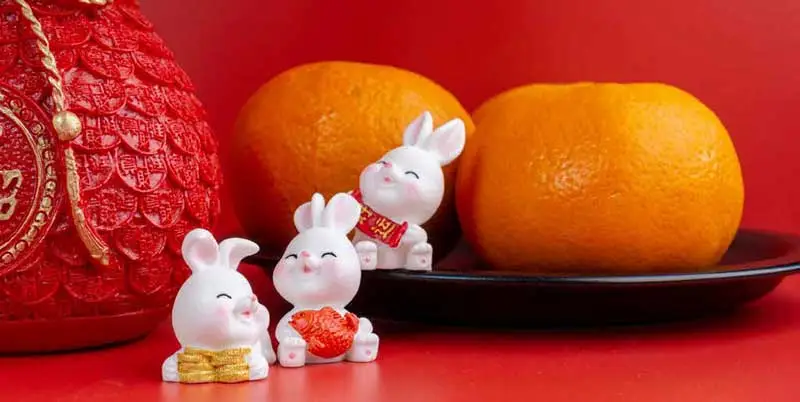
Let’s look at how the ancient Chinese designated the rabbit among the different time periods of a day. The “mao” rabbit was assigned the hours of “mao”, specifically the morning hours from 5 am to 7 am. It coincides with the time the sun rises, which is usually the time when the rabbits come out of their burrows and look for fresh grass. A Chinese dictionary states that the character “mao” (卯)represents a heavenly door in the shape of a pair of doors, allowing life to rise and thrive. It represents the second solar month i.e, February, which signifies the return of life and the coming of the spring season. As we see how the wellspring, wisdom, and mystery of life all stem from this heavenly door, we see how the idea of eternity and faith directly tie to this concept of ‘mao’.
The hidden mystery inside the rabbit can be viewed through the lens of our savior Jesus Christ:
1. The zodiac’s rabbit represents the idea of sacrifice akin to Jesus’ sacrifice for mankind.
2. Emperor Qingshi HuangDi’s rabbit represents purity and nobility, similar to Jesus’ holiness and purity.
3. General Guan Yu’s red rabbit represents courage and faithfulness akin to Jesus’ righteousness and defeat of evil.
4. The swiftness in folklore’s rabbit is similar to Jesus’ otherworldly abilities.
5. Mid-autumn’s rabbit’s immortality is akin to Jesus’ defeat of death.
6. The rabbit represented in marriage represents to love and kindness of Jesus.
7. The ‘mao’ rabbit of the early sunrise hours represents Jesus’ resurrection on the third day, opening the doors to heaven to those who believe, akin to those who accept Jesus will have eternal life.
It is evident that the rabbit’s significance in Chinese culture is akin to the fact that the sacrificial Jesus who gave up his life for our sins, died on the cross for our sins, and resurrected during the “mao” hours of dawn!
Are you ready to accept Jesus Christ who will rescue your soul so that you may enter the gates of heaven? If you are, pray the following with me: “Dear Lord Jesus Christ, I thank you for using the year of the rabbit and its cultural and historical significance to teach us the wisdom — the wisdom and mystery of your plan of salvation. I accept your salvation and give my life to you. May my spirit enter into eternity with you. I pray this sincerely in the name of Jesus, AMEN.”
Author: Pastor of Christian Alliance Bible Church in Los Angeles, CA
Tin, Timothy (translated by Mandy Kwan). “The Wisdom and Belief Behind the Year of the Rabbit” NYSTM Truth Monthly, February, 2023.
https://nystm.org/the-wisdom-and-belief-behind-the-year-of-the-rabbit/
With God as our Father, we have no need to worry !
▪︎ Topic: With God as our Father, we have no need to worry !
▪︎ Speaker: Pastor C.B. Trinh
▪︎ Language: English
▪︎ Nature: Evangelistic
▪︎ Duration: 10:25
▪︎ Date: June 16, 2026
有神為父就不用憂慮(粵語)
▪︎主題:有神為父就不用憂慮
▪︎講員:鄭智斌牧師
▪︎語言:粤語
▪︎性質:福音性
▪︎片長:9:50
▪︎日期:2026年6月16日
有神為父就不用憂慮(華語)
▪︎主題:有神為父就不用憂慮
▪︎講員:鄭智斌牧師
▪︎語言:華語
▪︎性質:福音性
▪︎片長:10:24
▪︎日期:2026年6月16日
Có Cha Thiên Phụ, Tôi sẽ không lo !(越南語 Vietnamese Tiếng Việt)
▪︎Chủ đề:Có Cha Thiên Phụ, Tôi sẽ không lo !
▪︎Diễn giả:Mục Sư Trịnh Chi Bình
▪︎Ngôn ngữ:Tiếng Việt
▪︎Thuộc thể loại:chia sẻ phúc âm
▪︎Thời lượng:11:28
▪︎Ngày:16 tháng 6 năm 2026
Đức Chúa Trời không quên quý vị và tôi!(越南語 Vietnamese Tiếng Việt)
▪︎Chủ đề:Đức Chúa Trời không quên quý vị và tôi!
▪︎Diễn giả:Mục Sư Trịnh Chi Bình
▪︎Ngôn ngữ:Tiếng Việt
▪︎Thuộc thể loại:chia sẻ phúc âm
▪︎Thời lượng:12:53
▪︎Ngày:6 tháng 6 năm 2026
神總不忘記你和我!(粤語)
▪︎主題:神總不忘記你和我!
▪︎講員:鄭智斌牧師
▪︎語言:粤語
▪︎性質:福音性
▪︎片長:10:43
▪︎日期:2026年6月6日
神總不忘記你和我!(華語)
▪︎主題:神總不忘記你和我!
▪︎講員:鄭智斌牧師
▪︎語言:華語
▪︎性質:福音性
▪︎片長:11:48
▪︎日期:2026年6月6日


Thương Yêu Lẫn Nhau!(越南語 Vietnamese Tiếng Việt)
▪︎Chủ đề:Yêu thương nhau
▪︎Diễn giả:Mục Sư Trịnh Chi Bình
▪︎Ngôn ngữ:Tiếng Việt
▪︎Thuộc thể loại:chia sẻ phúc âm
▪︎Thời lượng:9:55
▪︎Ngày: 27 tháng 5 năm 2026
彼此相愛(華語)
▪︎主題:彼此相愛
▪︎講員:鄭智斌牧師
▪︎語言:華語
▪︎性質:福音性
▪︎片長:9:09
▪︎日期:2026年5月27日
彼此相愛(粤語)
▪︎主題:彼此相愛
▪︎講員:鄭智斌牧師
▪︎語言:粤語
▪︎性質:福音性
▪︎片長:10:21
▪︎日期:2026年5月27日
天國僕人(粵語)
▪︎講員:滕張佳音博士
▪︎題目:天國僕人
▪︎經文:(馬太福音廿五14-30;廿四45-47)
▪︎語言:粤語 (附字幕)
▪︎時長:28:20
▪︎性質:總幹事交職禮
▪︎日期:2026年5月17日
▪︎地點:香港短宣中心
Trên con đường góa bụa,Chúa dẫng lối tôi đi !(越南語 Vietnamese Tiếng Việt)
▪︎ Chủ đề:Chúa Giê-su dắt đưa tôi tiến bước trên con đường góa bụa
▪︎ Diễn giả:Mục sư Trịnh Chi Bình
▪︎ Chứng nhân:Anh Ken
▪︎ Ngôn ngữ:Tiếng Việt
▪︎ Thuộc thể loại:chia sẻ phúc âm
▪︎ Thời lượng:12:47
▪︎ Ngày:16 tháng 5 năm 2026
喪偶路上耶穌領我往前走(粤語)
▪︎主題:喪偶路上耶穌領我往前走
▪︎講員:鄭智斌牧師
▪︎見證:Ken弟兄
▪︎語言:粤語
▪︎性質:福音性
▪︎片長:10:02
▪︎日期:2026年5月16日
喪偶路上耶穌領我往前走(華語)
▪︎主題:喪偶路上耶穌領我往前走
▪︎講員:鄭智斌牧師
▪︎見證:Ken弟兄
▪︎語言:華語
▪︎性質:福音性
▪︎片長:12:09
▪︎日期:2026年5月16日
人生窄路有耶穌領我走(粤語)
▪︎主題:人生窄路有 耶穌領我走
▪︎講員:鄭智斌牧師
▪︎見證:羅合梅牧師
▪︎語言:粤語
▪︎性質:福音性
▪︎片長:9:22
▪︎日期:2026年5月7日
人生窄路有耶穌領我走(華語)
▪︎主題:人生窄路有 耶穌領我走
▪︎講員:鄭智斌牧師
▪︎見證:羅合梅牧師
▪︎語言:粤語
▪︎性質:福音性
▪︎片長:9:22
▪︎日期:2026年5月7日
Chúa Giê-su dẫn dắt tôi trong con đường hẹp!(越南語 Vietnamese Tiếng Việt)
▪︎ Chủ đề:Chúa Giê-su dắt đưa tôi tiến bước trên con đường hẹp!
▪︎ Diễn giả:Mục sư Trịnh Chi Bình
▪︎ Chứng nhân:Mục sư La Hợp Mai
▪︎ Ngôn ngữ:Tiếng Việt
▪︎ Thuộc thể loại:chia sẻ phúc âm
▪︎ Thời lượng:9:42
▪︎ Ngày:7 tháng 5 năm 2026

滕張佳音博士
國宣創辦人
▪︎美國芝加哥三一福音神學院文學碩士(宣教)及教牧學博士(宣教學)
▪︎前建道神學院跨越文化研究部副教授
▪︎牧職神學院榮譽創院院長
▪︎國際短宣使團創辦人